AggreBloc – Fast, Sustainable &
Low-Cost Block and Brick Technology
AggreBloc – Fast, Sustainable & Low-Cost Block and Brick Technology
Convert Waste and Native Soil into Durable, Compressed Earth Blocks for Construction and Community Infrastructure
Convert Waste and Native Soil into Durable, Compressed Earth Blocks for Construction and Community Infrastructure
Turn Insitu Soil or Construction Waste into Building Materials
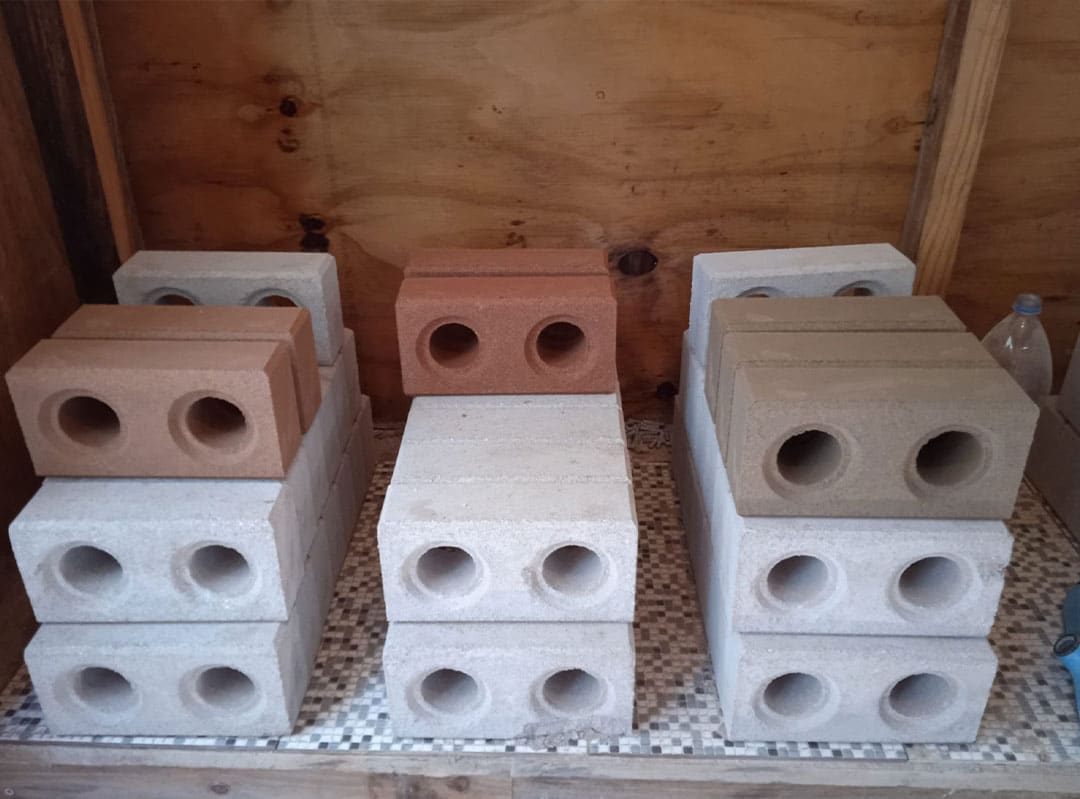
AggreBloc is a solution based on nanoscience, to build strong, load-bearing blocks, pavers and bricks from native soils, construction rubble, overburden or even mining waste with no firing, no cement, and no dependence on clean water. Blocks and bricks can be engineered for fast, affordable, and sustainable construction. Developed with AggreBind’s patented long-string, cross-linking copolymer technology, AggreBloc stabilises soil to make building materials at a molecular level, delivering structural strength even where clay or conventional brick-making materials are unavailable.
AggreBloc is an ideal solution for everything from low-cost housing and farm storage to signage walls and disaster-relief shelters. Exceeding local strength standards, AggreBloc resists water, and thrives in extreme temperatures. Communities can use locally available materials and labor, reducing both carbon footprint and cost by up to 50% compared to conventional block methods. With minimal energy input and a circular approach to material use, AggreBloc aligns with ESG and UN Sustainable Development Goals; empowering communities and industries to build cleaner, smarter, and more responsibly.
Where AggreBloc Works Best

Mining Operations and Tailings Management
Mining sites produce enormous quantities of overburden and tailings, which are typically treated as waste, stored, stockpiled, or transported off-site at significant cost. AggreBloc offers a practical, on-site alternative by turning these materials into compressed earth blocks for internal roads, security walls, utility structures, or even housing for staff. With no need for clay, cement, or firing, mining companies can stabilise waste material directly at source. This not only simplifies logistics but supports ESG targets by reducing waste volumes, carbon output, and dependence on traditional construction supply chains.

Scalable Housing for Communities
In low-income and rural areas, access to durable, affordable housing is severely limited by the high cost and low availability of cement, concrete, and kiln-fired bricks. AggreBloc bridges this gap by allowing local teams to produce building blocks from native soil. The resulting structures meet local strength standards and offer insulation, water resistance, and fire safety. With reduced costs (up to 50% savings in some regions), fast curing times, and zero kiln requirements, AggreBloc enables communities to build safe, strong permanent housing using the materials already beneath their feet.

On-Site Infrastructure for Remote Projects
Remote project sites often need storage sheds, perimeter walls, mess halls, and staff quarters built quickly and with limited resources. AggreBloc allows teams to create blocks on-site using available soil or construction debris, eliminating the cost and delay of transporting bricks or cement. With standard hand or mechanical compactors, blocks can be formed in any size or shape to match design needs. AggreBloc structures are thermally efficient, non-combustible, and weather-resistant, making them ideal for harsh climates and temporary or semi-permanent deployment.

Disaster Relief and Emergency Housing
In post-disaster regions, where time, materials, and manpower are critically limited, AggreBloc provides a reliable and fast path to shelter and economic growth. The blocks can be produced using on-site soil and any available water source (including saline or mildly contaminated), meaning communities can begin rebuilding immediately. The blocks cure quickly, resist moisture and temperature extremes, and require no ovens or cement additives. From emergency shelters to support buildings, AggreBloc supports first-response infrastructure that is cost-effective, safe, and scalable.

Agricultural and Rural Infrastructure
Farms and ranches often require buildings for storage, fencing, grain silos, or equipment sheds but may lack affordable construction options. AggreBloc allows farmers to use their own land’s soil and construction waste to produce durable, sealed blocks that resist heat, rain, and decay. With no kiln and low energy requirements, it’s ideal for rural communities. The blocks’ thermal mass helps regulate indoor temperatures, protecting stored goods and reducing the need for additional insulation or cooling systems. Farmers can build what they need, when they need it, without reliance on third-party suppliers.

Post-Conflict and Crisis Reconstruction
War-torn or disaster-affected communities often face long-term housing and infrastructure shortages, compounded by damaged roads, supply disruptions, and a lack of skilled labour. AggreBloc provides a solution for local materials and simple equipment to produce fire-safe, hydrophobic blocks for schools, clinics, homes, and community centres. By training residents in block production and using locally available soil or rubble, reconstruction can begin immediately, restoring stability, resilience, and economic recovery from the ground up.
Technical Performance
Compressive Strength
- Typically increases CBR by 400% to 600%, depending on soil and compaction.
Hydrophobic
- Water-resistant; repels moisture. Enhanced with HiPower Seal.
Thermal Mass
- Naturally insulates, stabilises internal temperatures.
Shelf Life
- AggreBind copolymer stores well in sealed, sun-protected containers.

AggreBloc in Action: Project Videos and Block Applications
See how AggreBloc transforms on-site soil and waste into durable blocks for housing, infrastructure, and recovery projects.
See more on our videos page here.

AggreBloc The Smarter Choice for Blocks, Bricks & Pavers

AggreBloc Brick production
Designed for places where other materials can’t reach.
AggreBloc empowers communities to build sustainably, using what they already have, where they already are.
AggreBloc FAQs: Your Questions Answered
What are AggreBloc bricks, blocks and pavers made from?
AggreBloc is made by stabilising local soil, crushed rubble, overburden, or mining by-product with AggreBind’s proprietary long-string, cross-linking copolymer. No clay or cement is required.
What kind of soil works best with AggreBloc?
AggreBloc works with a wide range of natural, non-organic soils and materials, including sandy soil, laterite, silty soil, and even excavation waste or mine tailings.
Can I use seawater or dirty water to mix with AggreBind?
Yes. The copolymer admixture tolerates seawater up to 4% salinity and mildly brackish or contaminated water, making blocks and bricks suitable for use in water-scarce or coastal regions.
How strong are AggreBloc bricks?
Independent lab tests show that AggreBind typically increases load-bearing strength by 400% to 600%, with strong tensile flexibility for seismic zones. Blocks also meet local structural standards.
What equipment do I need to produce AggreBloc?
Blocks can be made with hand presses, mechanical compactors, or hydraulic molds. AggreBind provides full guidance on suitable equipment and setup.
What can I build with AggreBloc?
AggreBloc is used for housing, worker accommodation, perimeter walls, agricultural projects and gardens, schools, clinics, signage, and even decorative pavers.
How long does it take for the blocks to cure?
Blocks will be solid to handle within 4-7 days and full curing will take up to 28 days. No special drying facility is required, just open-air curing on-site, preferably out of direct sunlight.
Is AggreBloc safe for people and the environment?
Yes. AggreBloc is non-toxic, non-hazardous, non-leaching and non-combustible. It creates blocks that are hydrophobic, fire-resistant, and thermally efficient.
Do I need a kiln or oven to make AggreBloc bricks?
No. AggreBloc blocks air-cure naturally. No firing, no high heat, and no energy-intensive processing.
How does AggreBloc compare to fired bricks?
AggreBloc blocks offer comparable (and often superior) strength without the need for clay, cement, or kilns. They’re faster to produce, require less energy, resist water and fire, and significantly reduce emissions and material costs.

Join Us In Shaping The Future
With AggreBind Solutions
Subscribe To Receive Our Project News